Skip to content
Bottle washing machinery specialists — UK supply, installation and support01494 623015 · sales@lancinguk.com
Bottle washing and drying

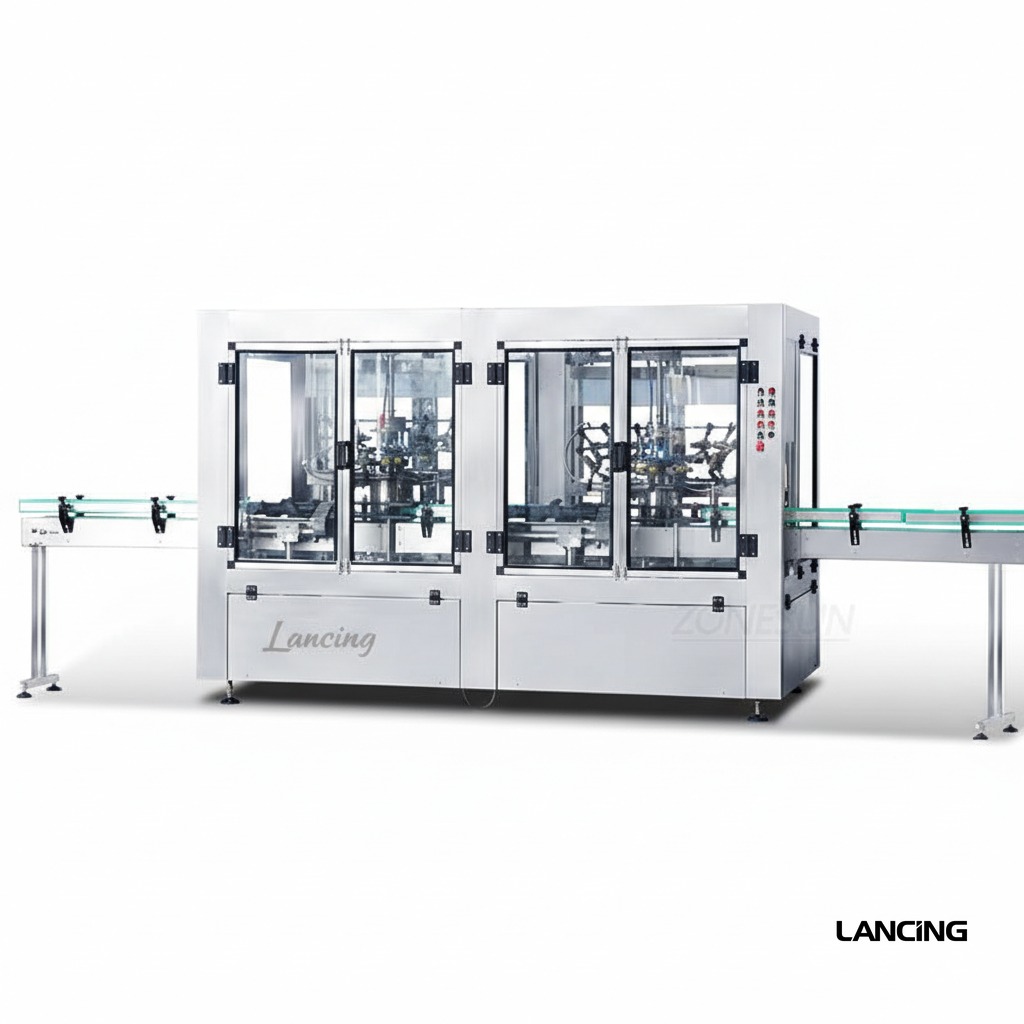
Full Automatic 12-Head Bottle Washing and Drying Machine

Automatic bottle washing and drying machine using high-pressure water washing and clean-air drying for multiple bottle shapes.

Full Automatic 12-Head Bottle Washing and Drying Machine
Final machine suitability must be confirmed against the real bottle, contamination level, required throughput, utilities and line layout.
Machine overview

Where this machine fits

A washing-and-drying route for projects where water carry-over needs to be controlled before the next production step. This route is relevant when a rinse-only stage is not enough and the bottle interior needs drying after washing.

  • High-pressure water washing stage
  • Clean-air drying stage after washing
  • Suitable for round-neck, flat and square bottle formats subject to testing
  • Useful before filling, inspection, labelling or rework stages
  • Final output and utilities confirmed against real bottle samples

Specification notes

Use the data below as an initial guide only. Bottle washing performance depends on container stability, neck opening, nozzle access, cleaning requirement, operator loading, conveyor flow and the condition of bottles entering the machine.

For a reliable proposal, send bottle drawings or samples with your target output and site constraints.

Machine typeAutomatic washing and drying
Heads12-head route listed
Cleaning methodHigh-pressure water washing
Drying methodHigh-pressure clean air
Bottle formatsRound-neck, flat and square formats listed
ConfigurationConfirmed during quotation

Ask for a project-specific recommendation

Send bottle photos, dimensions, residue details and required bottles per hour. We’ll check which washing route is most suitable before quoting.

Send enquiry
Validation notes

Wash-and-dry process validation notes

This additive specification section keeps the existing machine details in place and adds the practical checks normally needed before a bottle washer is confirmed for production.

Verified starting point

The first-party description covers high-pressure water flushing followed by a high-pressure clean-air drying stage for bottle shapes including round-neck, flat and square bottles.

Final suitability still depends on the real bottle, residue, site utilities, changeover expectations and where the machine sits in the wider line.

Where this route fits

This machine is best considered for projects where residual water after washing could affect filling, labelling, coding or product presentation.

  • Confirm bottle height, diameter and neck opening
  • Agree internal, external, rinse, wash or dry-off requirement
  • Check product residue, label material and contamination level
  • Confirm upstream and downstream handling before layout sign-off
Specification areaWhat to confirmWhy it matters
Cleaning validationVisible residue, odour, label adhesive, internal droplets and outside finish after the testPrevents choosing a machine before the required clean outcome is defined
Wash chemistry and temperatureWhether water-only, detergent, caustic or heated-water review is requiredDifferent residues, bottle materials and adhesives behave differently
Water and drainageSupply, pressure, filtration, drainage capacity and any water-reuse objectiveThese affect performance, reliability and installation planning
Changeover and accessFormat changes, guides, nozzles, bottle carriers, operator access and cleaning accessPractical production time depends on more than headline output
Buyer FAQ

Specification questions for this machine.

What should be tested before ordering the full automatic 12-head bottle washing and drying machine?

Test real bottles rather than relying only on catalogue descriptions. Check bottle stability, neck access, residue removal, external finish, drainage, dry-off where relevant and line transfer behaviour.

Can water or energy consumption be published without a final configuration?

No. Water, energy and drainage requirements should only be published or quoted once the selected configuration, wash stages, output and site services are known.

What sample details should be sent to Lancing?

Send bottle photos, drawings or dimensions, material, neck opening, height, diameter, residue type, label condition, desired pass/fail outcome, target output and site-service information.

When might another bottle washing route be more suitable?

Another route may be better if the required output, labour level, bottle stability, drying need, label-removal problem or footprint does not match the selected machine route.

Useful supporting pages: cleaning validation, water and drainage planning, returnable bottle preparation and project enquiry.

Wash-and-dry evidence

Confirm the drying result before relying on a wash-and-dry route.

This machine route is suited to projects where washing alone is not enough and residual moisture could affect the next stage. The first-party description explains high-pressure water washing followed by clean-air drying, with suitability for shapes such as round-neck, flat and square bottles. Week 2 specification work should therefore focus on proving the bottle can be washed and dried acceptably under realistic conditions.

Drying factorEvidence to captureNext-stage risk
Internal dropletsVisual check after the agreed cycle and before fillingProduct dilution, foaming, fill quality or contamination concern
External moistureLabel and code area inspection after dryingLabel adhesion, batch coding and carton packing issues
Bottle shapeRound, flat or square bottle samples with neck and shoulder detailsAirflow access, handling stability and dry-off consistency

Where the bottle is returned, labelled or visibly contaminated, combine this review with the returnable bottle guide and the chemistry and residue testing guide.

Wash-and-dry FAQ

Dry-off questions.

What should be photographed during a wash-and-dry trial?

Photograph the bottle before washing, immediately after drying and again at the downstream stage affected by moisture, such as filling, labelling or coding.

Can drying performance be published as a fixed claim?

Only where the result is verified against the bottle, cycle and site conditions. Without that evidence, drying should be treated as a configuration and trial point.

When is clean-air drying useful?

It is useful where residual water inside or outside the bottle could interfere with the following line stage or the required finish.

Wash-and-dry acceptance

Specify the required end condition, not simply “dry bottles”.

This machine route uses high-pressure water washing followed by clean-air drying. The required result should be defined in terms of the next process: filling, visual inspection, labelling, coding, storage or immediate transfer.

Downstream operationDrying or cleanliness questionEvidence to collect
FillingCan retained water dilute the first product or affect hygienic control?Internal moisture observation after the actual transfer time and start-up sequence
LabellingWill external droplets or spotting affect label adhesion and presentation?Surface inspection and a representative label application trial
Vision inspectionCould droplets, mist or condensation create false rejects?Images from the intended inspection arrangement under production lighting
Storage or accumulationCan bottles re-wet, collect dust or condense before the next step?Timed checks at the maximum expected accumulation period

Air-quality boundary

Define the required air quality, filtration arrangement, pressure and maintenance access as part of the project specification. The correct requirement depends on product risk, bottle use and the site’s own risk assessment; it should not be inferred from the word “clean-air” alone.

Inspection boundary

Use a repeatable inspection plan covering internal droplets, external water, spotting, residue and bottle damage. The post-wash bottle inspection guide provides a practical starting point.

For a representative trial, agree bottle geometry, water condition, wash cycle, air settings, line speed and time between discharge and inspection. Record those conditions with the result so that the trial can be repeated.

View the corresponding first-party Lancing machine information or send bottle samples and the required downstream condition.

Wash-and-dry questions

Questions that turn “dry bottles” into a testable end condition.

The drying stage should be specified against the next process and bottle geometry. These questions help define the evidence required during a wash-and-dry trial.

What does “dry enough” mean after bottle washing?

“Dry enough” means the remaining internal and external moisture does not interfere with the agreed next process or acceptance requirement. The condition may be different for immediate filling, adhesive labelling, ink coding, vision inspection, storage or manual packing, so it should be defined before the drying system is selected.

State where droplets are unacceptable, when the inspection occurs after the machine and how borderline bottles are treated. A general claim of complete dryness should not replace a representative bottle trial.

Define drying and moisture-control criteria

How should residual droplets be checked during a wash-and-dry trial?

Residual droplets should be checked at a fixed time and location after the drying stage, using representative bottles and the intended line speed. Inspect the bottle interior, neck, shoulder, base, external recesses and any feature that can trap water, then record the observation against the agreed pass/fail rule.

Use consistent lighting and bottle orientation for comparisons. Photographs can support the record, but the test method should also state whether bottles were moved, inverted or left to drain before inspection.

Plan the inspection method

What air-quality information is required for a bottle drying stage?

A bottle drying stage needs the source, filtration, pressure or flow range, oil and moisture controls, maintenance method and intended contact boundary of the air supply to be confirmed for the application. The appropriate specification depends on whether air contacts the bottle interior and on the customer’s product and hygiene system.

Do not assume that site compressed air is suitable merely because it is available. Include filter access, condensate management and monitoring responsibility in the utilities and maintenance plan.

Review utilities and air supply · Plan filter maintenance

Why can bottle geometry change drying performance?

Bottle geometry changes drying performance because shoulders, bases, threads, handles, embossing and internal transitions can retain liquid or shield surfaces from the air stream. Two bottles with the same nominal volume can therefore need different orientation, drain time, nozzle position or air exposure.

Test the slowest-draining format and the most difficult surface feature, not only a simple round bottle. A format change should trigger a first-off moisture check before normal production resumes.

Review orientation and coverage

Define the required moisture condition before quotation.

Send bottle samples, drawings, the intended next process, line speed and the acceptable internal and external moisture condition for a project review.

Send bottle-washing project details