Skip to content
Bottle washing machinery specialists — UK supply, installation and support01494 623015 · sales@lancinguk.com
Automatic bottle washing

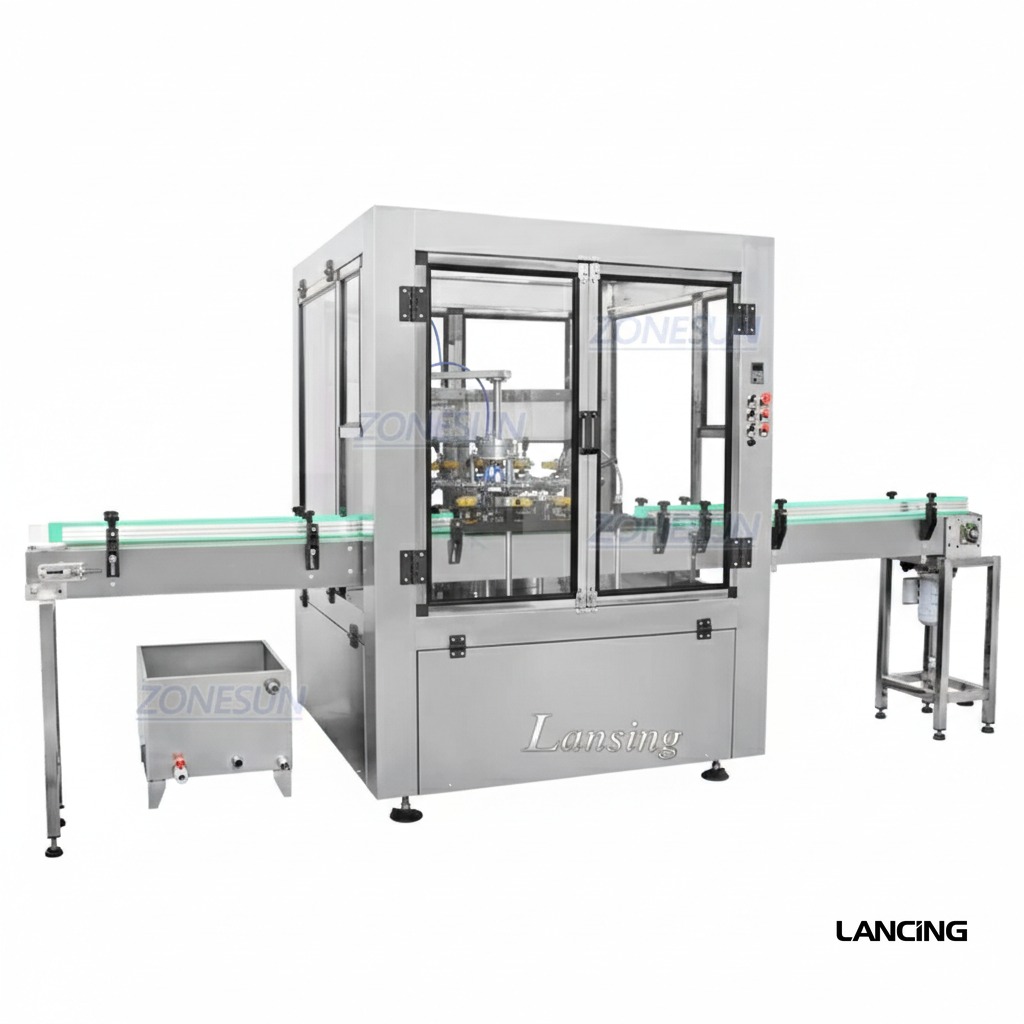
LU-WB12 Automatic Bottle Washer with 12 Nozzles

Automatic bottle washer with 12 nozzles and conveyor system for inner and outer bottle cleaning in production lines.

LU-WB12 Automatic Bottle Washer with 12 Nozzles
Final machine suitability must be confirmed against the real bottle, contamination level, required throughput, utilities and line layout.
Machine overview

Where this machine fits

An inline automatic bottle washing route for manufacturers that need a cleaner, more repeatable stage before filling or downstream packaging. The machine is positioned for both inner and outer bottle-surface cleaning with conveyor integration.

  • 12-nozzle washing configuration listed
  • Conveyor system for inline production handling
  • Listed working speed about 2,800 bottles per hour
  • Typical listed utilities: 110/220V and 0.75kW
  • Useful for projects where bottle cleanliness and throughput need improving together

Specification notes

Use the data below as an initial guide only. Bottle washing performance depends on container stability, neck opening, nozzle access, cleaning requirement, operator loading, conveyor flow and the condition of bottles entering the machine.

For a reliable proposal, send bottle drawings or samples with your target output and site constraints.

Machine modelLU-WB12
Listed working speedAbout 2,800/h
Nozzle quantity12
Listed power0.75kW
Listed voltage110/220V
Best-fit discussionBottle dimensions, residue, line speed and utilities

Ask for a project-specific recommendation

Send bottle photos, dimensions, residue details and required bottles per hour. We’ll check which washing route is most suitable before quoting.

Send enquiry
Validation notes

LU-WB12 validation and integration notes

This additive specification section keeps the existing machine details in place and adds the practical checks normally needed before a bottle washer is confirmed for production.

Verified starting point

The first-party specification lists 12 nozzles, output at about 2,800 bottles per hour, 110/220V supply and 0.75kW power for this route.

Final suitability still depends on the real bottle, residue, site utilities, changeover expectations and where the machine sits in the wider line.

Where this route fits

This machine is best considered for inline washing where bottle movement, conveyor transfer and nozzle alignment need to be checked before filling.

  • Confirm bottle height, diameter and neck opening
  • Agree internal, external, rinse, wash or dry-off requirement
  • Check product residue, label material and contamination level
  • Confirm upstream and downstream handling before layout sign-off
Specification areaWhat to confirmWhy it matters
Cleaning validationVisible residue, odour, label adhesive, internal droplets and outside finish after the testPrevents choosing a machine before the required clean outcome is defined
Wash chemistry and temperatureWhether water-only, detergent, caustic or heated-water review is requiredDifferent residues, bottle materials and adhesives behave differently
Water and drainageSupply, pressure, filtration, drainage capacity and any water-reuse objectiveThese affect performance, reliability and installation planning
Changeover and accessFormat changes, guides, nozzles, bottle carriers, operator access and cleaning accessPractical production time depends on more than headline output
Buyer FAQ

Specification questions for this machine.

What should be tested before ordering the LU-WB12 automatic bottle washer with 12 nozzles?

Test real bottles rather than relying only on catalogue descriptions. Check bottle stability, neck access, residue removal, external finish, drainage, dry-off where relevant and line transfer behaviour.

Can water or energy consumption be published without a final configuration?

No. Water, energy and drainage requirements should only be published or quoted once the selected configuration, wash stages, output and site services are known.

What sample details should be sent to Lancing?

Send bottle photos, drawings or dimensions, material, neck opening, height, diameter, residue type, label condition, desired pass/fail outcome, target output and site-service information.

When might another bottle washing route be more suitable?

Another route may be better if the required output, labour level, bottle stability, drying need, label-removal problem or footprint does not match the selected machine route.

Useful supporting pages: cleaning validation, water and drainage planning, returnable bottle preparation and project enquiry.

Trial evidence

LU-WB12 checks before treating the listed output as realistic.

The LU-WB12 route is strongest when the bottle can be consistently presented to the nozzles and moved through the conveyor without instability. The published Lancing specification lists 12 nozzles, 110/220V, 0.75kW and a working speed around 2,800/h, but the usable output for a project still depends on bottle handling, residue level, operator workflow and the connected line.

CheckWhy it mattersEvidence to send
Nozzle and neck accessThe bottle opening and shoulder shape affect whether the internal wash route can contact the relevant area.Neck opening, photos, drawings or sample bottles.
Conveyor stabilityLightweight or tall bottles can limit real running speed before the washer itself becomes the constraint.Height, diameter, base style and target transfer route.
Residue levelDust, oil, odour or visible product residue may require a different wash brief from a simple new-bottle clean.Before photos and a pass/fail description after washing.

For returned or visibly contaminated bottles, use the chemistry and residue testing guide before comparing this inline washer with the wash-and-dry machine.
LU-WB12 FAQ

Extra specification checks.

Does the listed working speed guarantee project output?

No. The listed speed is useful for early comparison, but realistic output depends on the bottle, residue, conveyor behaviour, operator workflow, changeovers and the wider line.

What should be checked for narrow-neck bottles?

Confirm the neck opening, shoulder shape and nozzle access with drawings, measurements or samples before assuming the wash reaches the required internal area.

When should this route be compared with wash-and-dry machinery?

Compare wash-and-dry machinery when residual moisture after washing could affect filling, labelling, coding or packing.

LU-WB12 project evidence

Validate the listed output against the real bottle and line.

The LU-WB12 is listed with 12 nozzles, 110/220V supply, 0.75kW power and output of about 2,800 bottles per hour. Those first-party figures describe the machine route; project acceptance should still use the actual bottle family, contamination and line conditions.

What to prove with representative bottles

  • Stable bottle presentation and repeatable neck-to-nozzle alignment
  • Internal and external coverage appropriate to the stated washing duty
  • Transfer into and out of the machine without scuffing, tipping or uncontrolled gaps
  • Drainage and residual moisture compatible with the next operation
  • Changeover method for every bottle family included in the quotation
  • Safe access for cleaning, inspection and routine nozzle checks

Line data required

Provide the upstream conveyor speed and height, bottle pitch, accumulation method, downstream filler requirement and intended start/stop logic. If the washer is to run as part of a complete line, define what should happen when the filler stops, bottles back up or water pressure is outside the agreed operating condition.

Use the line-integration and controls checklist.

Acceptance boundary: the project specification should distinguish the listed machine capability from the tested result for the supplied bottle, residue and operating conditions. A representative factory acceptance test is the strongest way to confirm that distinction.

View the corresponding first-party Lancing machine information or send bottle samples and line details for review.

LU-WB12 buyer questions

Questions to answer before the listed LU-WB12 data is applied to a project.

The LU-WB12 page contains verified starting data. These additional questions define the handling, nozzle and line evidence needed before that data is treated as a project result.

Which bottle formats need the closest nozzle-alignment checks on the LU-WB12?

Narrow-neck, offset-neck, lightweight, unstable and strongly shaped bottles need the closest LU-WB12 nozzle-alignment checks. The bottle opening must arrive consistently over the intended wash position without the body twisting, tipping or striking guides during transfer.

The trial should include the smallest neck opening, least stable base and widest body expected in production. Check both entry and exit because a bottle that locates correctly over a nozzle can still become unstable when liquid drains or the conveyor restarts.

Review nozzle and coverage checks

How should the 12-nozzle layout be tested with the real bottle spacing?

The 12-nozzle layout should be tested with the actual bottle pitch, guide setting and conveyor behaviour intended for the project. Confirm that every bottle reaches the correct position, receives the intended internal and external wash exposure, drains without interfering with its neighbour and leaves the station in a stable orientation.

A timed trial should record missed positions, leaning bottles, contact between containers, retained liquid and the conditions used. Bottle pitch is part of the process specification, not only a conveyor dimension.

Include the checks in the FAT

What can reduce sustainable output below the listed LU-WB12 speed?

Sustainable LU-WB12 output can be reduced by bottle instability, inconsistent infeed spacing, manual replenishment, rejected bottles, drainage time, downstream stops and the need to inspect or rewash failures. The listed figure should therefore be confirmed under the bottle, line and acceptance conditions agreed for the project.

Measure conforming bottles leaving the complete test, not only conveyor movement through the wash station. If the filler or labeller stops frequently, accumulation and interlocks can be as important as the washer cycle.

Plan line capacity and accumulation

What downstream interface information is needed for an inline LU-WB12 project?

An inline LU-WB12 project needs the downstream conveyor height, bottle direction, required spacing, filler infeed behaviour, available accumulation, stop/start logic and the condition in which bottles must arrive. Confirm whether residual water, external wetting or bottle temperature can affect filling, capping, labelling or coding.

The controls discussion should define run permission, fault signals, emergency-stop interface and what happens to bottles already inside the washer when the next machine stops.

Plan the mechanical and controls interface

Check the LU-WB12 with representative bottles.

Send bottle dimensions, neck opening, photographs or samples, contamination duty, required output and the surrounding conveyor information for a project-specific review.

Send bottle-washing project details