Skip to content
Bottle washing machinery specialists — UK supply, installation and support01494 623015 · sales@lancinguk.com
Bottle label removal

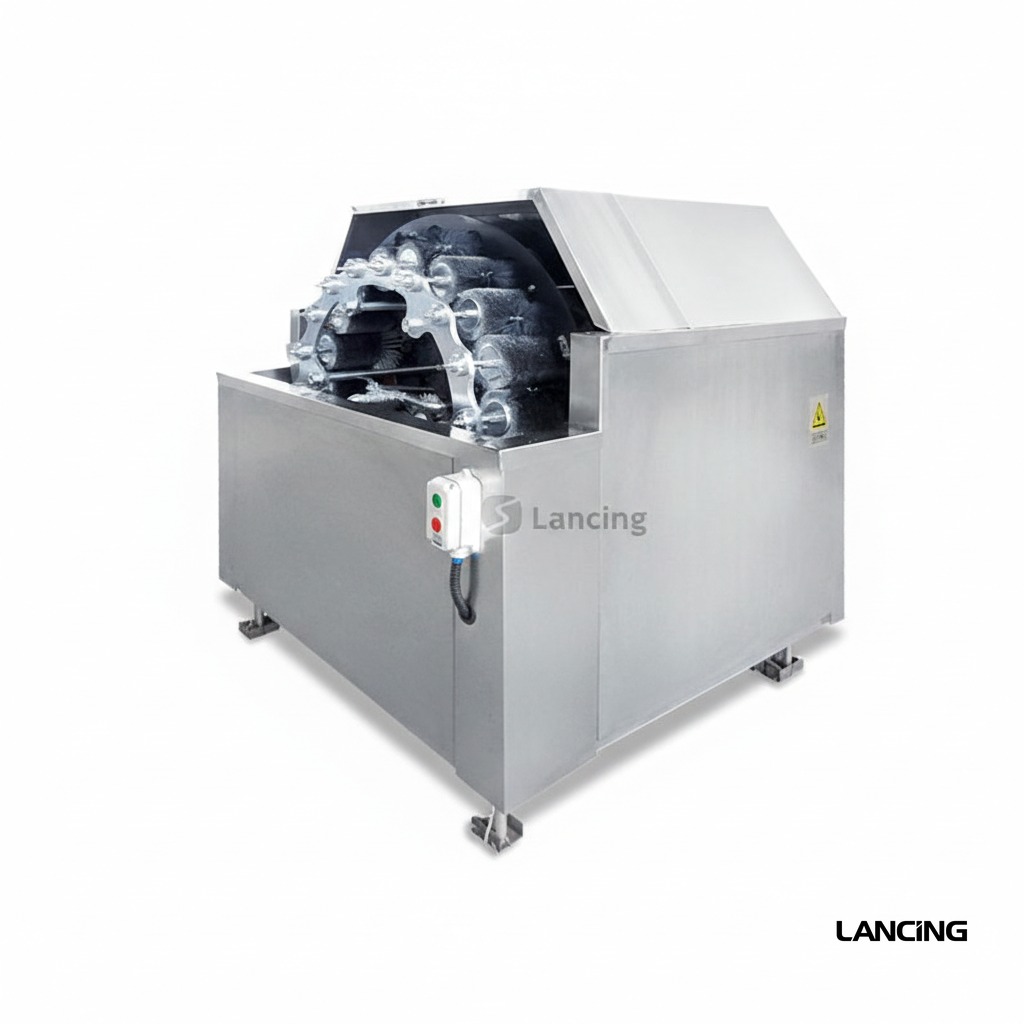
LU-BLR18 Bottle Label Remover

Bottle label remover for returnable bottles, bottle recovery, rework and preparation before washing.

LU-BLR18 Bottle Label Remover
Final machine suitability must be confirmed against the real bottle, contamination level, required throughput, utilities and line layout.
Machine overview

Where this machine fits

A label-removal support machine for returnable-bottle, recycling and rework workflows where labels must be removed before washing, inspection or reuse.

  • Designed for bottle label-removal support
  • Listed output 2,000 bottles per hour
  • Bottle opening diameter listed at 12–60mm
  • Bottle body diameter listed at 70–100mm
  • Listed power 4kW, 380V

Specification notes

Use the data below as an initial guide only. Bottle washing performance depends on container stability, neck opening, nozzle access, cleaning requirement, operator loading, conveyor flow and the condition of bottles entering the machine.

For a reliable proposal, send bottle drawings or samples with your target output and site constraints.

Machine modelLU-BLR18
Listed output2,000 BPH
Bottle opening diameter12–60mm listed
Bottle body diameter70–100mm listed
Bottle heightCustomisable listed
Listed power4kW, 380V

Ask for a project-specific recommendation

Send bottle photos, dimensions, residue details and required bottles per hour. We’ll check which washing route is most suitable before quoting.

Send enquiry
Validation notes

LU-BLR18 label-removal validation notes

This additive specification section keeps the existing machine details in place and adds the practical checks normally needed before a bottle washer is confirmed for production.

Verified starting point

The first-party specification lists LU-BLR18, 2,000bph capacity, 12–60mm bottle opening diameter, 70–100mm bottle body diameter and 4kW, 380V power.

Final suitability still depends on the real bottle, residue, site utilities, changeover expectations and where the machine sits in the wider line.

Where this route fits

This machine is best considered for returnable-bottle projects where paper, film labels or adhesive need to be dealt with before final washing or reuse.

  • Confirm bottle height, diameter and neck opening
  • Agree internal, external, rinse, wash or dry-off requirement
  • Check product residue, label material and contamination level
  • Confirm upstream and downstream handling before layout sign-off
Specification areaWhat to confirmWhy it matters
Cleaning validationVisible residue, odour, label adhesive, internal droplets and outside finish after the testPrevents choosing a machine before the required clean outcome is defined
Wash chemistry and temperatureWhether water-only, detergent, caustic or heated-water review is requiredDifferent residues, bottle materials and adhesives behave differently
Water and drainageSupply, pressure, filtration, drainage capacity and any water-reuse objectiveThese affect performance, reliability and installation planning
Changeover and accessFormat changes, guides, nozzles, bottle carriers, operator access and cleaning accessPractical production time depends on more than headline output
Buyer FAQ

Specification questions for this machine.

What should be tested before ordering the LU-BLR18 bottle label remover?

Test real bottles rather than relying only on catalogue descriptions. Check bottle stability, neck access, residue removal, external finish, drainage, dry-off where relevant and line transfer behaviour.

Can water or energy consumption be published without a final configuration?

No. Water, energy and drainage requirements should only be published or quoted once the selected configuration, wash stages, output and site services are known.

What sample details should be sent to Lancing?

Send bottle photos, drawings or dimensions, material, neck opening, height, diameter, residue type, label condition, desired pass/fail outcome, target output and site-service information.

When might another bottle washing route be more suitable?

Another route may be better if the required output, labour level, bottle stability, drying need, label-removal problem or footprint does not match the selected machine route.

Useful supporting pages: cleaning validation, water and drainage planning, returnable bottle preparation and project enquiry.

Label-removal evidence

Check label removal as part of the returnable-bottle process, not as a stand-alone keyword.

The LU-BLR18 route is most useful when label condition is the blocker before reuse, rework or washing. Lancing's first-party specification lists model LU-BLR18, 2,000bph capacity, 12–60mm bottle opening diameter, 70–100mm bottle body diameter and 4kW/380V power. Suitability still depends on the real label material, adhesive, coverage, bottle shape and what condition the bottle must reach before washing.

Label sample evidence

  • Full bottle photos showing label coverage
  • Adhesive and label material where known
  • Whether adhesive residue can remain before washing
  • Condition of the bottle body after removal

Rewash planning

  • Whether bottles need internal washing after de-labelling
  • Whether external washing or drying is also required
  • How rejects or damaged bottles will be handled
  • Where the label remover sits in the line layout

Use the returnable bottle washing guide to define the sequence, then compare the wash-and-dry route if residual moisture or external finish matters after label removal.
Label-removal FAQ

Extra checks before quotation.

Does every returnable bottle need a label remover?

No. Some returnable projects can be washed without a separate de-labelling stage, while others need label removal before washing. The decision depends on label coverage, adhesive, bottle condition and the required end result.

What samples help confirm label-removal suitability?

Send labelled bottles or clear photos showing label position, label material, adhesive behaviour, bottle diameter and the required finish before washing.

Should label-removal output be treated as guaranteed?

No. Listed capacity is an initial reference. Actual output depends on bottle handling, label condition, adhesive behaviour, changeovers and line integration.

Label-removal trial

Test the complete label and adhesive combination.

The LU-BLR18 is listed at 2,000 bottles per hour for bottle openings of 12–60 mm and body diameters of 70–100 mm, with 4kW power and 380V supply. Suitability depends on the bottle, label construction, adhesive, storage history and the cleaning stage that follows removal.

Representative sample set

Include new labels, aged labels, wet or chilled bottles where relevant, difficult adhesive areas and the realistic mix of returned bottles. Do not rely on a single freshly labelled sample.

Acceptance observations

Record label removal, adhesive residue, paper or film fragments, bottle marking, breakage and the amount of manual rework required. Define whether the next washer must remove remaining adhesive.

Waste route

Plan how labels, adhesive, wash liquor and solids are separated, collected and removed. Confirm cleaning access and the drainage or trade-effluent route before finalising the layout.

Sample variableWhy it can change the resultWhat to record
Paper, film or metallised labelMaterial can tear, stretch or release differentlyRemoval percentage, fragments and downstream capture
Adhesive type and ageBond strength and residue can change during storage or useRemaining adhesive area and required washing action
Bottle conditionScuffs, chips and contamination can affect handling and reject decisionsPre-existing damage and any damage after the trial

Use the reusable wine and beer bottle process guide to place de-labelling within the full returnable workflow. View the corresponding first-party Lancing machine information or send labelled bottle samples for review.

LU-BLR18 buyer questions

Questions that define label-removal performance beyond bottle diameter.

The LU-BLR18 page contains verified model data. The questions below define the label, adhesive, waste and downstream evidence that must be checked with real samples.

Which labels and adhesives should be included in an LU-BLR18 sample trial?

An LU-BLR18 sample trial should include every materially different label stock and adhesive expected in production, including paper and film labels, old and newly applied labels, different coverage areas and bottles stored under different moisture or temperature conditions. The worst credible combination should be identified clearly.

Do not combine unlike samples without traceability. Mark each bottle or batch so removal, tearing, glue retention and bottle marking can be linked to the exact label system.

Build the label compatibility sample matrix

How should remaining label adhesive be scored after de-labelling?

Remaining adhesive should be scored against a defined acceptance scale that identifies location, area, thickness or tack and its effect on final washing, inspection, conveying and relabelling. “Most glue removed” is not precise enough for a repeatable purchasing decision.

Use consistent lighting and handling, and distinguish removable wet residue from hardened or smeared adhesive. Record whether the bottle needs a subsequent wash stage and whether glue transfers to guides, conveyors or inspection equipment.

Connect de-labelling to final washing

What should happen to detached label waste?

Detached label waste should be captured and removed through a planned route that prevents face stock and adhesive from recirculating, blocking nozzles, contaminating tanks or reaching downstream machinery. The route depends on label material, volume, water use and the final machine configuration.

The project should identify screens, filters or collection points, cleaning access, waste handling responsibility and the effect on drains or trade effluent. These details should be confirmed with the site and machine design rather than assumed from the model name.

Review water and effluent planning

When should label removal and final bottle washing be specified as separate stages?

Label removal and final washing should be specified as separate stages when detached label material or adhesive would otherwise overload the main wash, when different operating conditions are needed, or when the process requires an inspection or rejection decision between de-labelling and final cleaning.

A separate stage can also make troubleshooting clearer because label failure and residue failure are observed independently. The process flow should show how bottles transfer between stages and where waste is removed.

Map the staged process

Send a representative label and adhesive sample set.

Include bottles from different label batches and storage ages, plus the required residual-adhesive condition and the intended final washing stage.

Send bottle-washing project details