Automatic inline bottle washer
For conveyor-fed production lines where repeatable internal and external cleaning is required.
Read moreFor smaller producers deciding when machinery is justified.
Manual washing can work for very small batches, but consistency, labour time and repeatability become limiting as production grows.
Semi-automatic equipment can create a more repeatable process while keeping flexibility for varied bottle sizes and smaller runs.
These are the details that separate a useful enquiry from a generic request for manual vs semi-automatic bottle washer.
Use these pages to compare automatic, semi-automatic and wash-dry options before sending samples or drawings.
For conveyor-fed production lines where repeatable internal and external cleaning is required.
Read moreFor compact, flexible production where operator involvement and changeover flexibility are useful.
Read moreFor projects where water removal after washing is important before filling, labelling or packing.
Read moreWhen labour, inconsistency or output begins limiting production, semi-automatic machinery is worth reviewing.
No, but it can reduce manual effort and improve repeatability.
Often yes, but the practical range must be checked.
Send bottle photos, bottle dimensions, residue details, target output and whether the machine needs to connect to an existing filler, capper, labeller or conveyor.
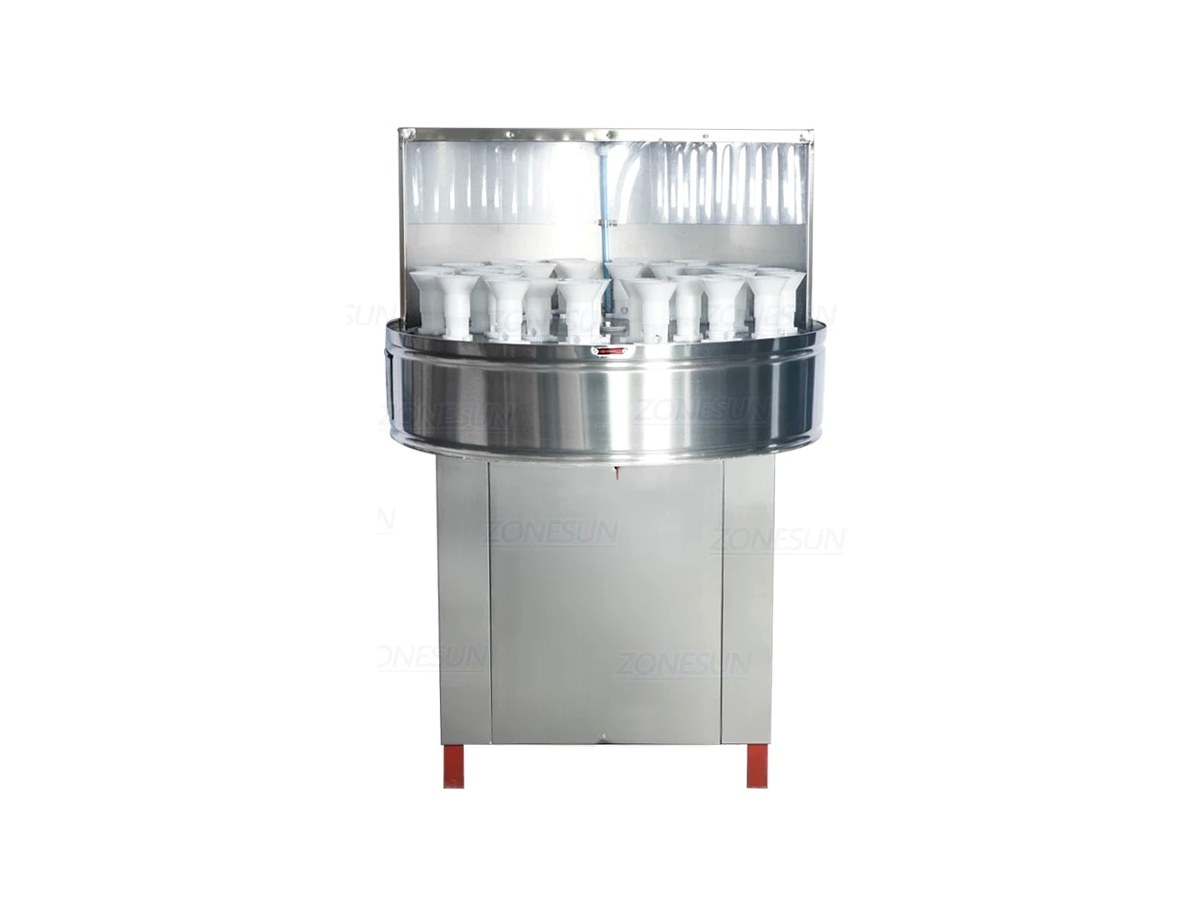
Request a bottle washer quoteThe practical comparison includes loading, unloading, operator cycle, bottle stability, changeovers and target output. The LU-WB32 page gives the relevant semi-automatic reference.
Review the LU-WB32 model page for the listed head count, output context and bottle-specific checks.
View the LU-WB32 rotary bottle washerCompare operator involvement, changeovers and line integration before choosing the automation level.
Compare semi-automatic and automatic routes