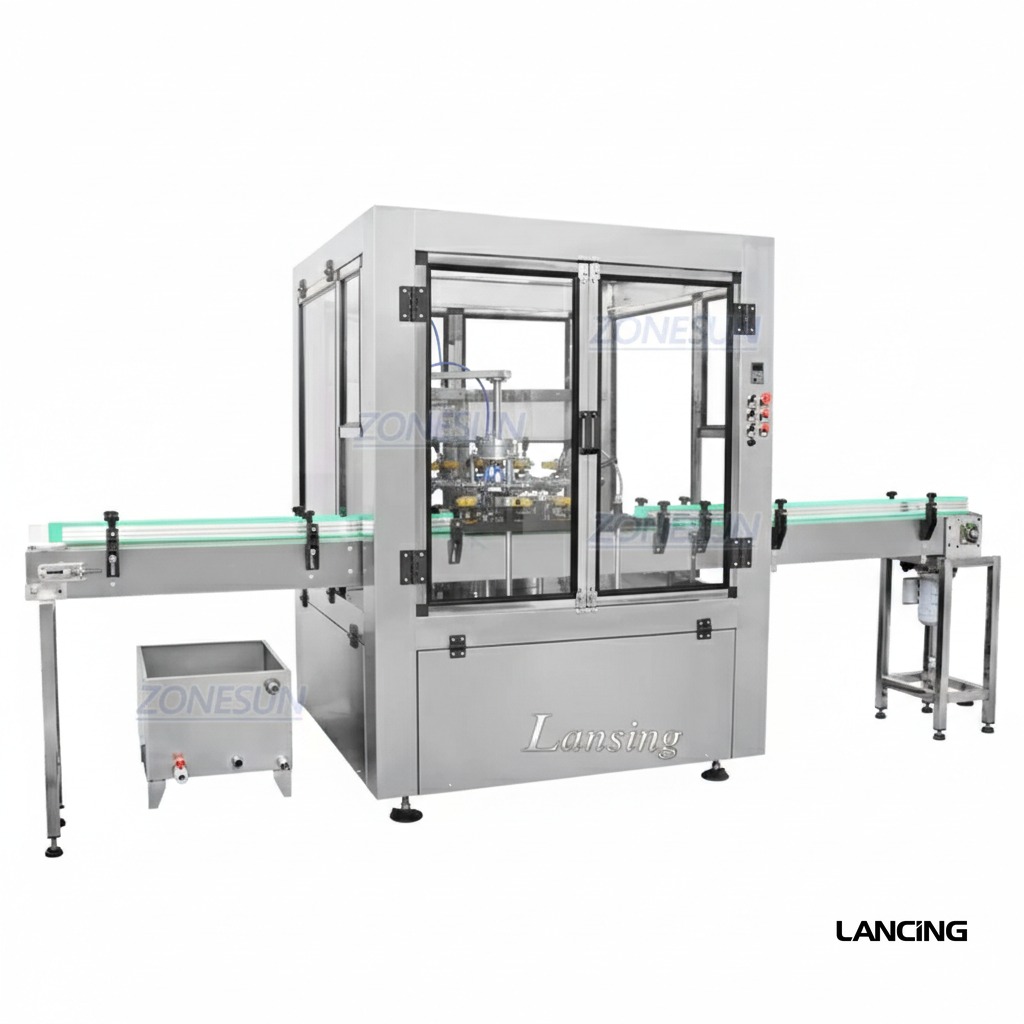
Automatic inline bottle washer
For conveyor-fed production lines where repeatable internal and external cleaning is required.
Read moreFor buyers deciding how to prepare bottles before filling.
Air rinsing and water rinsing are both preparation steps, but they solve different problems. Water can help remove loose particulate from bottle surfaces, while air approaches may be considered where water carryover is undesirable.
If bottles have residue, labels, oil or visible contamination, neither simple air nor water rinsing may be sufficient.
These are the details that separate a useful enquiry from a generic request for air rinsing vs water rinsing bottles.
Use these pages to compare automatic, semi-automatic and wash-dry options before sending samples or drawings.
For conveyor-fed production lines where repeatable internal and external cleaning is required.
Read moreFor compact, flexible production where operator involvement and changeover flexibility are useful.
Read moreFor projects where water removal after washing is important before filling, labelling or packing.
Read moreIt depends on what must be removed and whether residual water is acceptable.
Only for light preparation tasks; contaminated bottles need washing.
Check bottle condition, line speed, utilities and product sensitivity.
Send bottle photos, bottle dimensions, residue details, target output and whether the machine needs to connect to an existing filler, capper, labeller or conveyor.
Request a bottle washer quoteAir and water rinsing are specialist pre-fill container-preparation decisions. Bottle washing remains the owner for returned, labelled or materially contaminated containers.
Use the process guide to decide whether light particulate removal or an active wash is required.
Compare bottle rinsing and bottle washingFor clean new bottles, compare air, water, rotary and rinse-dry machinery on the dedicated Lancing bottle-rinser site.
Visit the specialist Bottle Rinsers UK site